
ADHD and eating disorders often go hand in hand. However it’s rarely talked about enough. Most people think ADHD is just about focus, behaviour, or school and work performance. But food is rarely part of the conversation and it really should be. In this blog we will think through why eating can feel harder with ADHD, what medication does to appetite, and what actually helps in real life.
This overlap between ADHD and eating disorders reflects how the brain regulates attention, impulses, reward, and routine. When these systems are disrupted, eating patterns can become confusing, frustrating, and sometimes harmful.
For example. some people with ADHD may forget to eat all day and only notice when they feel shaky or drained. Others feel out of control around certain food. Some rely on quick, high-sugar snacks for energy. While others lose their appetite entirely when taking medication.
What is ADHD?
Attention Deficit Hyperactivity Disorder (ADHD) is a neurodevelopmental condition, characterised by persistent patterns of hyperactivity, inattention, disorganisation and impulsivity.
There are three recognised forms:
- Predominantly inattentive
- Predominantly hyperactive-impulsive
- Combined
At its centre, ADHD affects your executive functioning. This is the brain skills we use to plan, organise, make decisions, and pause before doing something. We rely on these skills to shop for food, prepare meals, notice hunger, and stop when full. So you can see why when those systems feel shaky, eating routines are often one of the first things to slip.
Research suggests that different forms of ADHD can have different effects on your eating and even your BMI. For example people with predominantly inattentive and combined ADHD can be more likely to be overweight. While those with more of a hyperactive-impulsive ADHD often have a lower BMI and may be underweight. Which is why it is so key to have individualised support and someone who really helps you understand the problems.
How ADHD and eating disorders affects eating and appetite
Eating sounds simple. But when you break it down, it actually requires quite a lot from the brain. Noticing hunger, slowing down, planning meals, and stopping when full, all come into play. If those systems feel shaky, eating can start to feel unpredictable too.
Below, we’ll explore some of the main ways ADHD can affect eating and appetite.
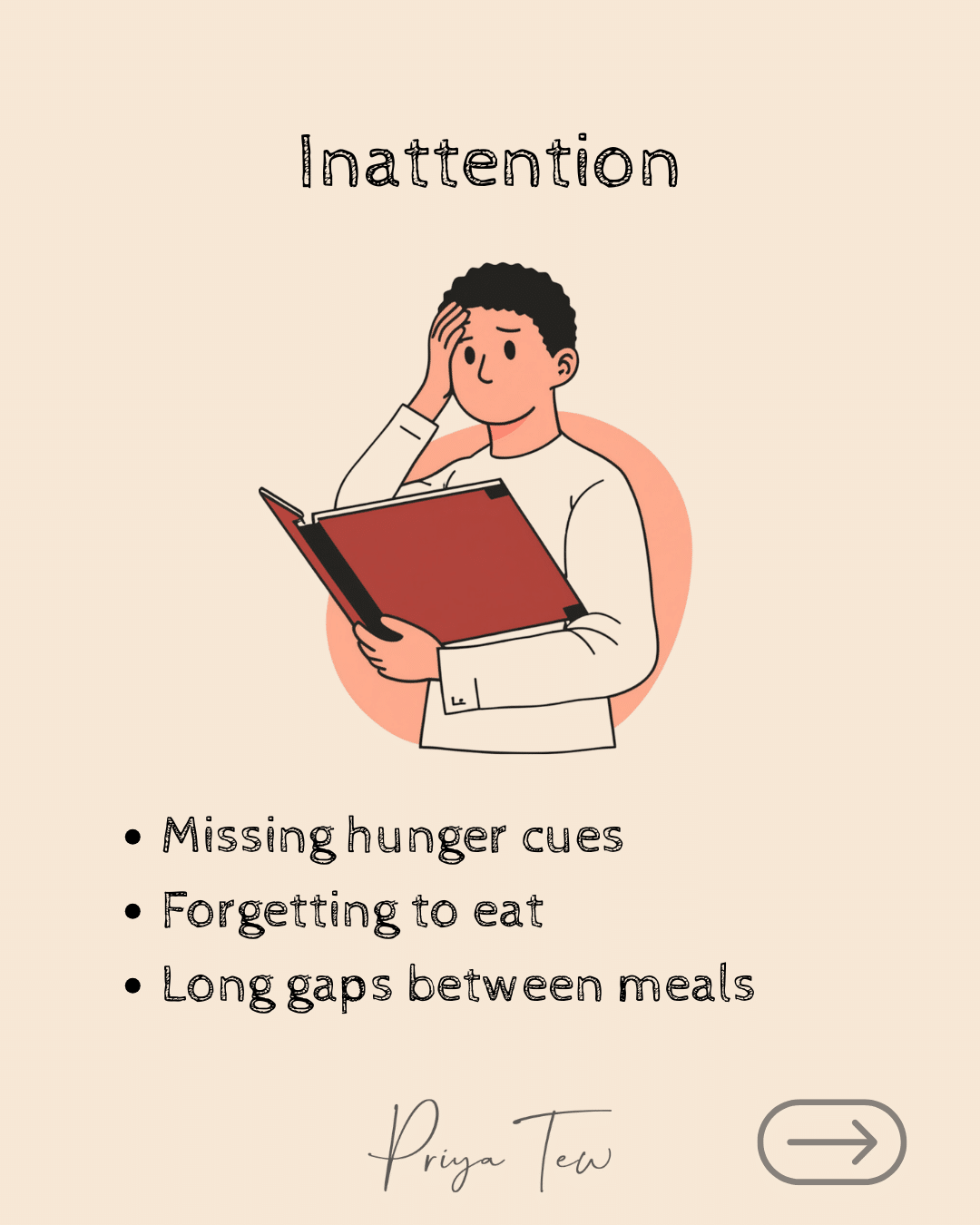
Inattention
ADHD can mean you genuinely forget to eat. Hyperfocusing on work, school, or hobbies can mean hours pass without food. You may not notice subtle hunger cues until you feel shaky, irritable, or low on energy.
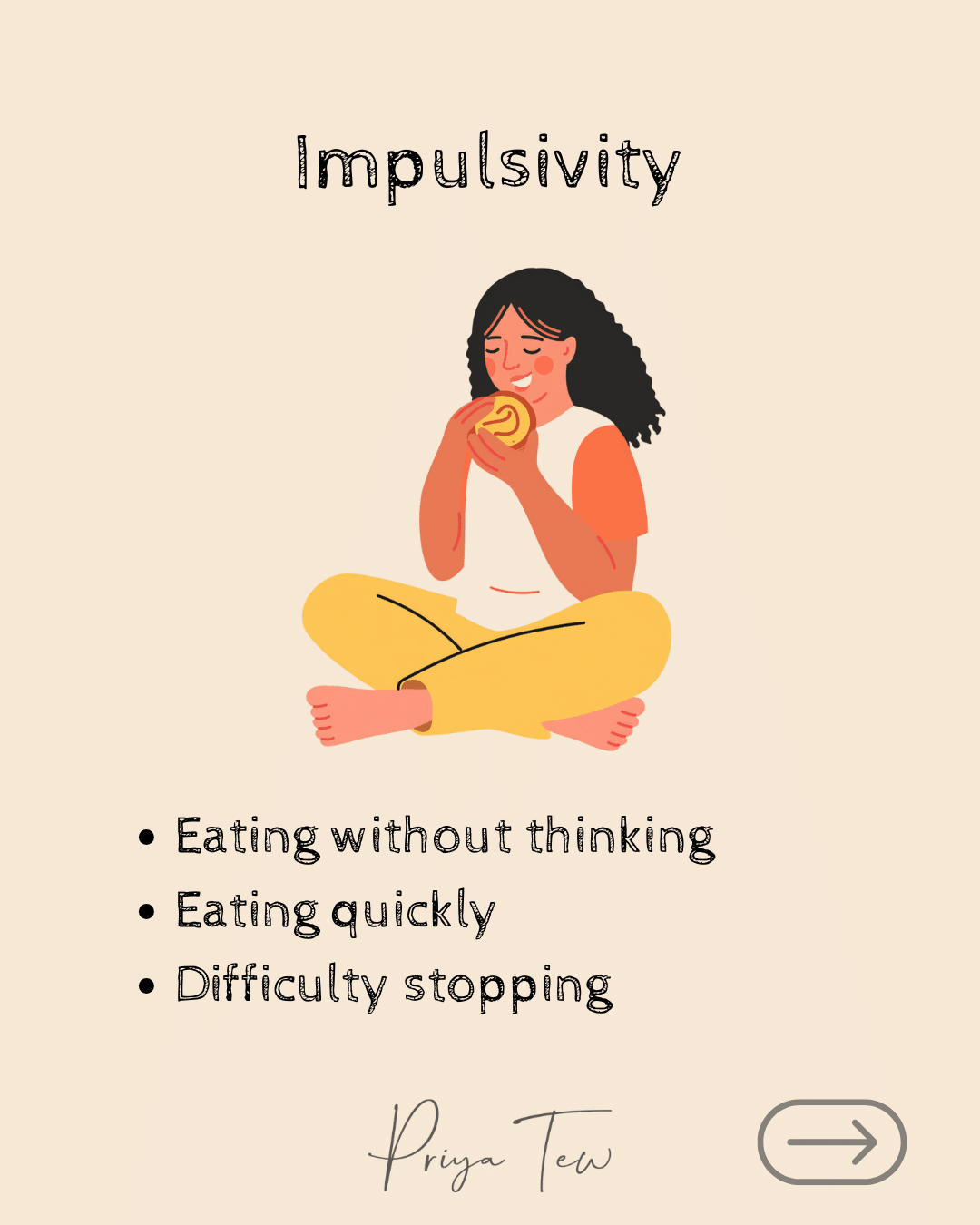
Impulsivity
Impulsivity can show up at mealtimes – for example grabbing food without thinking, eating quickly, or struggling to stop once started. Some people eat out of boredom rather than actual hunger. These impulsivity can lead to binge eating for some people.
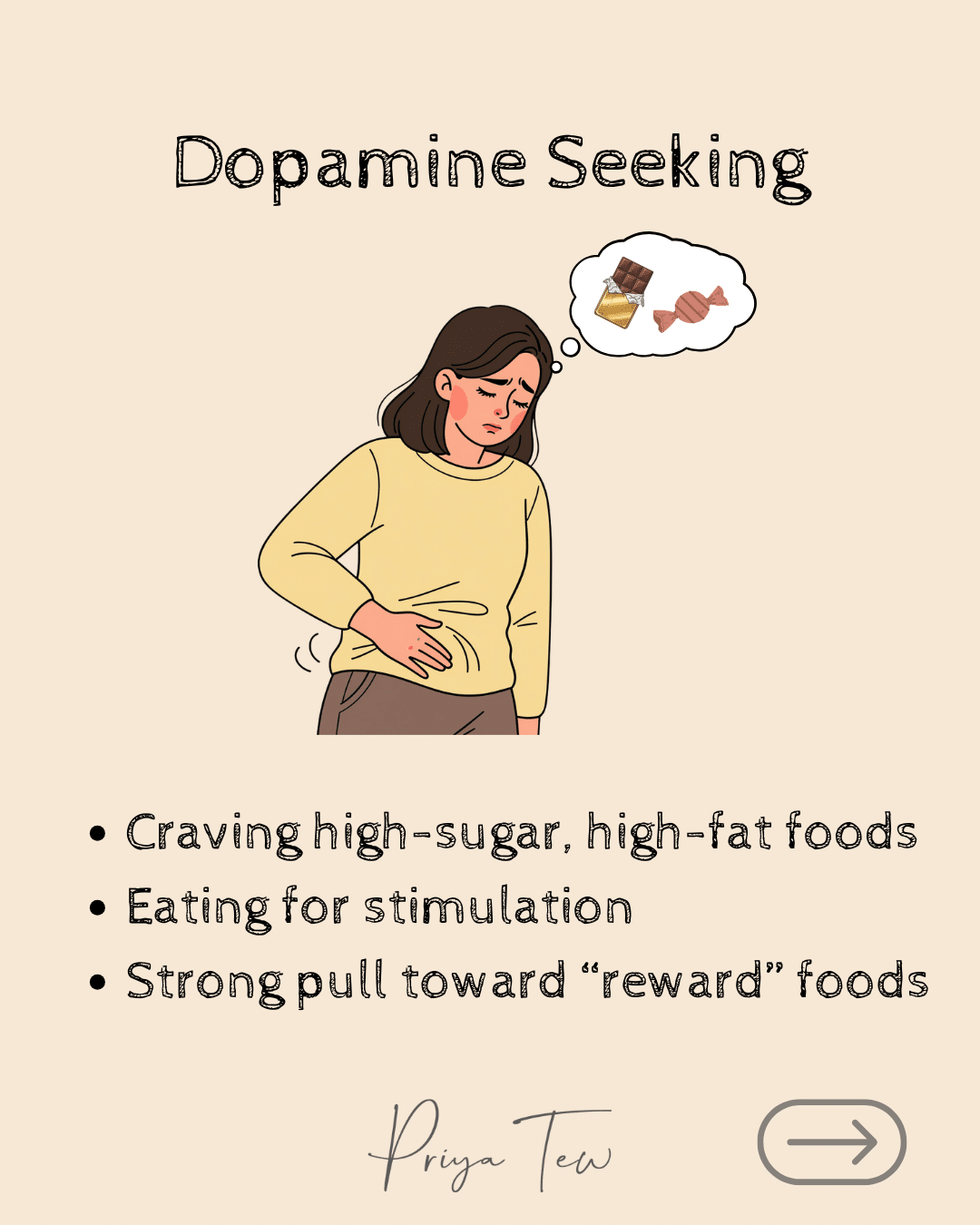
Reward and Dopamine
ADHD is associated with differences in dopamine regulation, which affects your motivation and reward signals. Foods high in sugar & fat, stimulate dopamine release. This may make these foods especially appealing to individuals with ADHD. It’s not a lack of self-control. It’s your brain trying to get what it feels it needs.
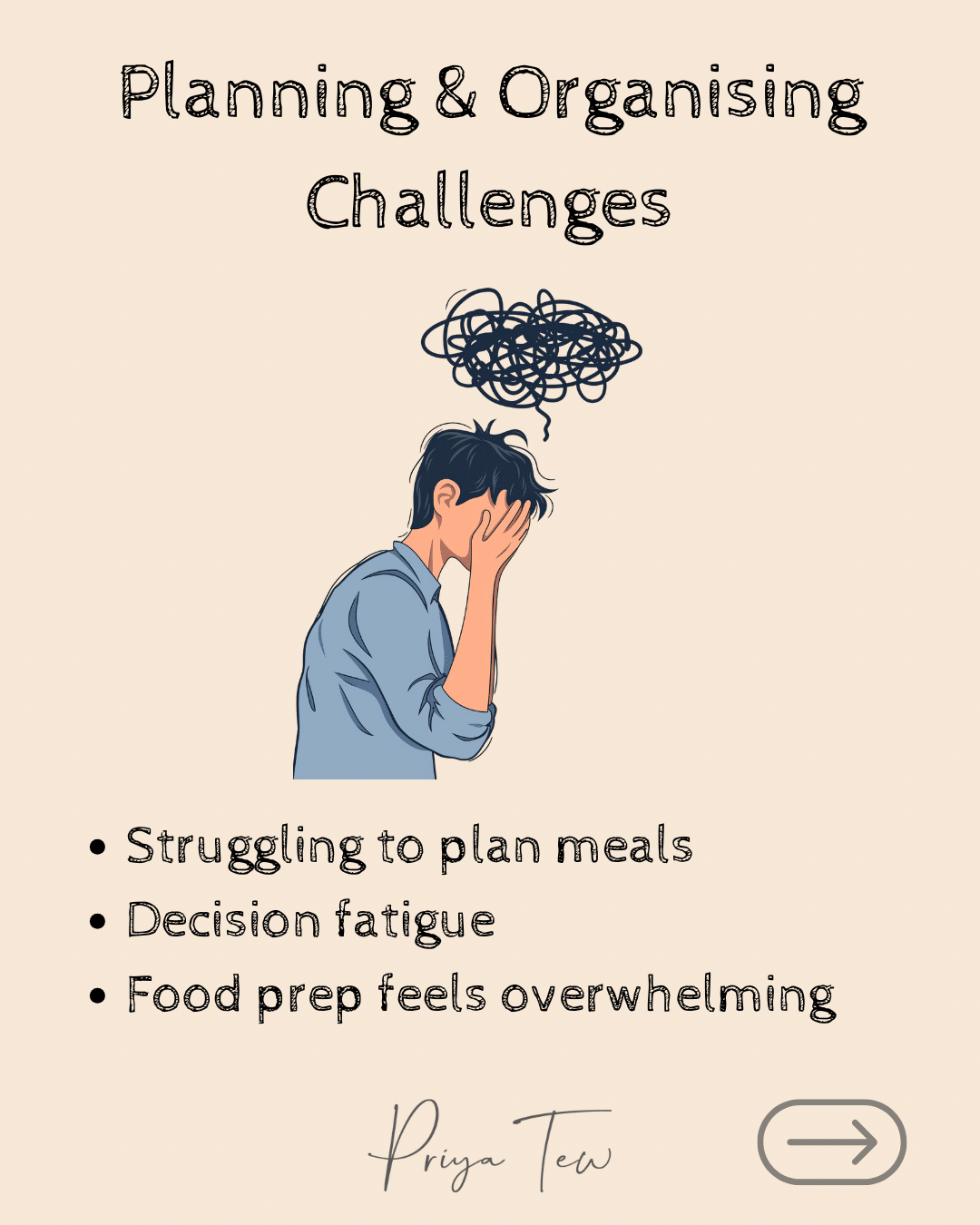
Planning & Organisation Challenges
Cooking, shopping, and even deciding what to eat all rely on planning skills. In ADHD you can struggle with these skills which makes these tasks overwhelming. This can lead to skipped meals, repetitive meals, or a over-reliance on convenience foods.
Some people with ADHD may struggle with emotional eating or rigid food preferences. For some people, these patterns can slowly develop into more defined eating disorders, like binge eating disorder or avoidant restrictive food intake disorder (ARFID).
You can read more on ARFID here.
If any of this sounds familiar, you’re not failing. I promise. Your brain just needs structure and support.
The Impact of ADHD Medication
Medication can be a really helpful part of the discussion around ADHD and Eating Disorders.
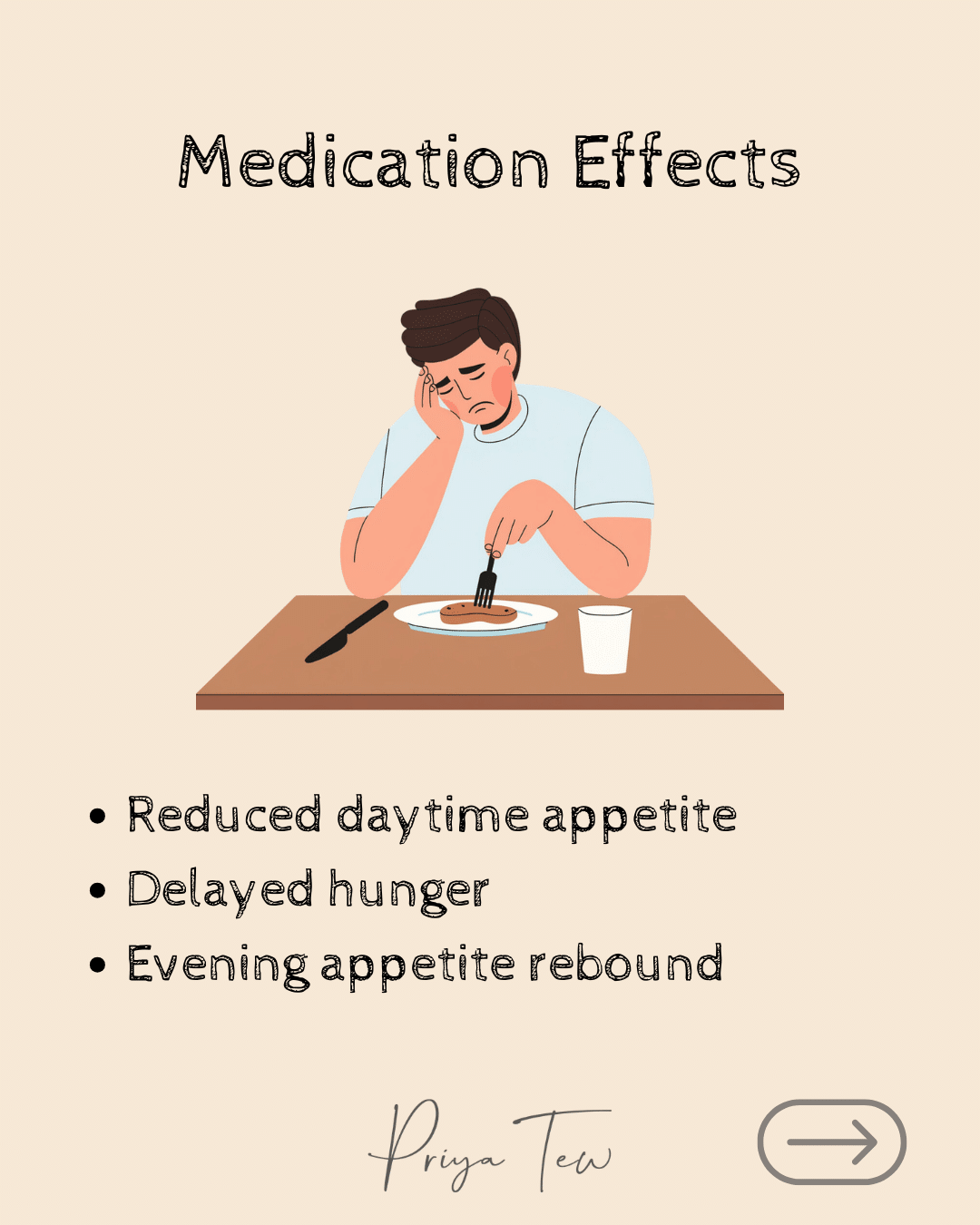
Stimulant medications, such as methylphenidate, are effective for managing core symptoms. However, they often suppress appetite.
Some people can feel little hunger during the day and only feel able to eat once the medication wears off. For those vulnerable to restrictive eating, this can complicate recovery. On the other hand, improved impulse control may reduce binge-type behaviours for some individuals.
Monitoring growth, weight and overall intake is particularly important in children and teens. Research suggests that combining medication with behavioural and nutritional support offers the most balanced outcomes.
It is also important to be aware that using medication without medical guidance can increase the risk of disordered eating, so it’s important this is always monitored.
Practical Strategies to Help
Supporting yourself, or someone you care about, isn’t about getting it perfect. It requires structure, consistency and compassion. Small, repeated changes tend to work far better than big dramatic ones.
Here are some supportive strategies that can help:
- Create predictable meal times. Routine is key.
Aim for 3 meals and 2-3 snacks daily, at regular intervals throughout the day. Setting reminders on your phone or a timer can help prevent accidental skipping of meals. This works better than waiting for hunger cues. - Plan around medication: If your appetite being low is an issue, prioritise a balanced breakfast before taking medication. Include protein, carbohydrates, and healthy fats. Some people benefit from a slightly larger evening meal when appetite returns.
- Reducing long gaps between meals: Long periods without eating can trigger intense hunger and impulsive overeating later in the day. So try keeping balanced snacks handy and reduce distractions at mealtimes. Popping your food on a plate instead of eating from the packets or on the go can also reduce overeating.
- Keep food simple and accessible. Planning and cooking can be overwhelming. Rotating a few reliable meals, batch cooking, and using pre-prepped ingredients can reduce that decision fatigue. This can help make eating more manageable.
- Support nutritional adequacy: Food selectivity or irregular eating may increase the risk of nutrient deficiencies or growth concerns in children. Working with a registered dietitian can help identify gaps, support balanced intake, and develop realistic meal plans that feel achievable rather than restrictive.
- Address emotional regulation. Many eating difficulties in ADHD are rooted in challenges with emotional regulation rather than food itself. Therapy (such as CBT), ADHD coaching, parent support programmes and practical regulation strategies can be just as important as nutrition advice in building a more stable relationship with food.
For more information on meal planning and building balanced plates, check out my free meal planning guide here.
Because ADHD and eating disorders are linked to regulation, the focus should be on structure over restriction.
Take Home Message
The link between ADHD and Eating Disorders is real and is far more common than most people realise. This isn’t about laziness. And it’s definitely not about willpower. They reflect differences in dopamine regulation, impulse control and executive functioning.
When ADHD and Eating Disorders are approached with a combined strategy, structured routines, appropriate medication, behavioural support and nutritional guidance, outcomes improve. With patience and consistent support, eating patterns can stabilise. Small, steady changes really do make a difference, even if it doesn’t feel like it straight away.
Understanding the connection between ADHD and Eating Disorders allows us to move from blame to practical, compassionate support.
References
- Pinto, S., Correia-de-Sá, T., Sampaio-Maia, B., Vasconcelos, C., Moreira, P. and Ferreira-Gomes, J. (2022). Eating Patterns and Dietary Interventions in ADHD: A Narrative Review. Nutrients, [online] 14(20), p.4332. doi:https://doi.org/10.3390/nu14204332.
- Chen, S.-C., Stanley, M., Li, H., Shou, J.-W., Qin, J., Wu, G.-T., Cheng, W.-Y. and Yeung, W.-F. (2025). Parental Perspectives on Eating Disorders of Their School-Age Children with ADHD in Hong Kong: A Qualitative Study. Nutrients, [online] 17(3), pp.513–513. doi:https://doi.org/10.3390/nu17030513.
- Finn, D.M., Menzel, J.E., Gray, E. and Schwartz, T. (2023). Pharmacotherapy for attention deficit/hyperactivity disorder in youth with avoidant restrictive food intake disorder: a case series of patients prescribed stimulant medication in a partial hospitalization program for eating disorders. Journal of eating disorders, 11(1). doi:https://doi.org/10.1186/s40337-023-00954-1.
- Lin, J., Taufman, K., Begdache, L. and Rusudan Kvirikashvili (2025). The Relationship Between Illicit ADHD Medication Use and Eating Behaviors: Exploring the Impact on Body Weight and Shape. Physiology, 40(S1). doi:https://doi.org/10.1152/physiol.2025.40.s1.0514.